Capetonians encouraged to cherish Cape Town’s everyday Heritage
28 September 2020
Cape Town is known for its rich cultural and natural heritage, an important driver for the local tourism economy. Our heritage includes our inherited architecture, our memories, our past and the meaning we attach to these things.
Heritage management is often mistakenly perceived as the practice and privilege of protecting and preserving selected moments or monuments of our past, whose value in today’s world may or may not be challenged.
Our tangible heritage resources are diverse and undoubtedly valuable, and in large parts of our City co-exist alongside everyday heritage and practices. This can be referred to as living heritage or intangible cultural heritage. It is a contested subject, but with research rapidly emerging around the world, it is presenting new values and ideas that are being integrated into the popular understanding of heritage, the law and how it is applied.
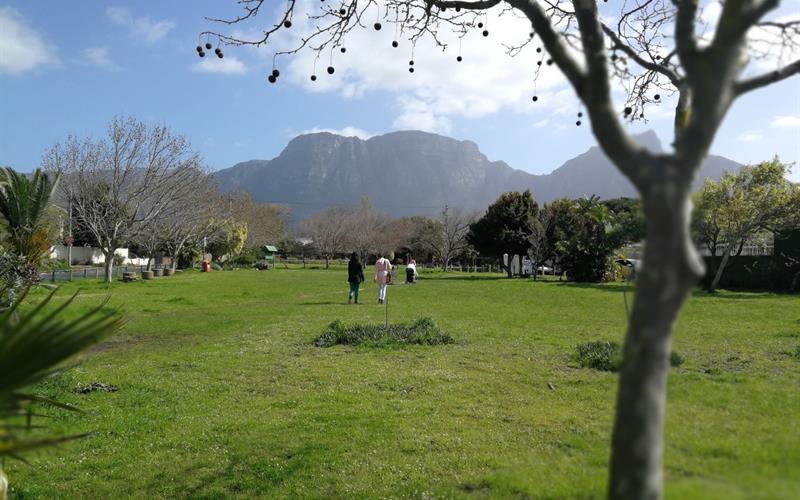
The National Heritage Act’s definition of Living heritage includes “cultural traditions, oral histories, performance, ritual, popular memory, skills and techniques, indigenous knowledge systems and a holistic approach to nature, society and social relationships”.
‘Living heritage is linked to our identity and includes practices that can bring people together to create a deeper understanding of our past, to move us towards a shared, inclusive and representative heritage future. But living heritage does not exist in isolation and it is easy to compartmentalise it. It is inextricably linked to our inherited built environment. Living heritage can relate to the lanes that lead down to the springs and streams to collect water in Newlands Village.
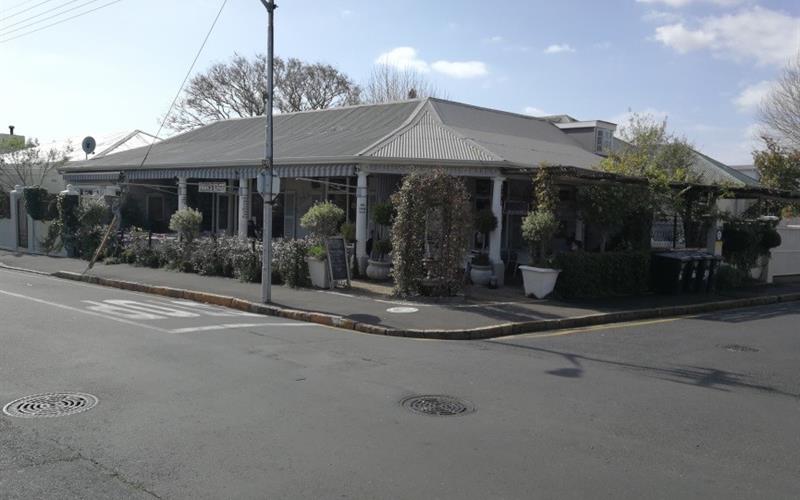
‘It can be the stoeps and verandas where food is shared and where children are watched while playing in the street, and where neighbours have communed for generations. Living heritage may exist in memory and in open spaces, seemingly devoid of a past, but in which former residents may have been forcibly removed in the wake of the Groups Areas Act. Living heritage may even be the Athaan (call to prayer) sounding out across the neighbourhoods,’ said the City’s Mayoral Committee Member for Spatial Planning and Environment, Alderman Marian Nieuwoudt.
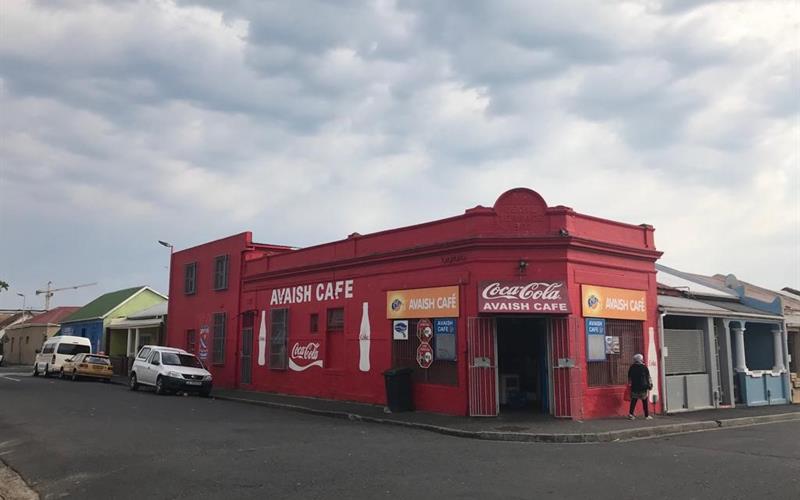
One such physical marker of living heritage is the corner shop. Traced back to the turn of the 19th century, the corner shop proliferated in Cape Town. Commonly, it had a place of residence attached for the shopkeeper with an associated Victorian terrace.
The corner shops sprung up as Indian migrants sought economic opportunity. It was highly regularised by the government, who wanted to hold and control economic power. These shops soon became places of social gathering, and of security for the working class, who could not afford basic supplies on a daily basis. The shopkeeper would allow patrons to buy on credit, which became known as the practice of “koep oppie boekie” (buying on credit).
It was a means to survive and this practice still continues, with businesses still held in the same family line today. Similarly, local butcheries, cobblers, fruit and vegetable sellers and tailors were the backbone and social capital of the community.
Cultural heritage is therefore more than what is visible and tangible. It is the everyday and the mundane, as well as the extraordinary and monumental. It is the oral histories, knowledge systems and social relationships which are more significant when they are connected to a place. The job and responsibility of heritage now is also to make the “everyday” more visible and include it in our place-making.
‘Thus, I want to encourage all residents to cherish the importance of the everyday heritage in our city and make every effort to visit a corner shop, sit in a park, take a taxi (while social distancing), walk the streets of Cape Town, taste and smell the food, and remember the past, acknowledge its value in the present, and imagine what an inclusive heritage future could look like, before the end of this Heritage Month. These places carry a rich history that needs to be passed on to the next generation,’ said Alderman Nieuwoudt.
End
Published by:
City of Cape Town, Media Office